
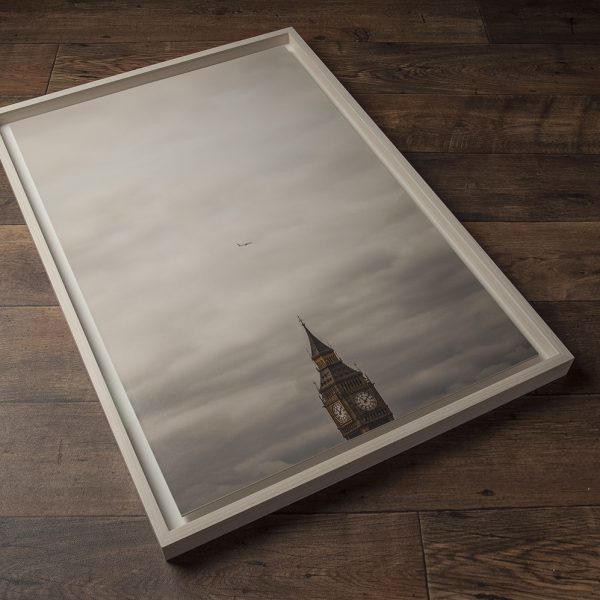
Is DIY framing ever a good idea?
What is perhaps the most important consideration after buying or receiving a print or an artwork? We say it is how best to frame it! A high-quality picture frame greatly enhances any photograph or painting. At SohoFrames we have plenty of frame styles to choose from to really make your artwork pop. And if you don’t see anything you like, we can make it!
However, many people choose DIY framing. And it’s never been easier to pick up a cheap, off-the-shelf frame online. All well and good. Few people would argue against the price and convenience. That said, using a professional framing service like SohoFrames offers great benefits. It’s cost-effective to do a job once. It will last. And you will enjoy looking at it knowing that every frame of ours comes with a superb after service.
Should I frame my own artwork?
Framing your own artwork is certainly doable but, like all DIY projects, it requires knowledge, practice, considerable time, and specialist tooling. As a note, it takes around 6 years to train a picture framer. It’s not just the actual craftwork either, it’s also knowing how to handle artwork correctly and assemble everything without causing damage. However, if you do still intend to take on the job yourself, there are few important points to consider.
Do you have the right materials?
Apart from the wooden frame rim itself, one of the first materials you should consider is the one closest to the actual artwork: the mountboard.
We’ve seen frames come into our workshop with all sorts of mounting substrates, including some big no-nos like pulpboard and cardboard, both of which can damage the artwork due to the acid content. We use conservation or archival, as well as museum-standard mounting boards. The differences between these are subtle. However, museum boards made of pure cotton are the gold standard. That said, none of the boards we use will harm your artwork. Non-archival mountboards will leave a brown mark on the print beneath the window. This is a tell-tale sign that the acid in the board has leached out onto the work.
You should also invest in high quality mounting tapes to attach the artwork onto the float board or into the window mount. Too often, we see masking tape or sellotape holding an artwork onto a board. The chemicals and oils that these tape contain can stain the artwork and cause significant and sometimes irreversible problems, particularly on expensive, fragile and antique pieces.
Can you join the wood properly?
It takes a great deal of expertise to cut and join the wood itself. Every component of your frame, mount, spacers, glass, and the frame itself will need to be exactly the right size to ensure that everything fits together perfectly. You should cut perfect mitre joints at the corners of the frame, which you will then need to join together perfectly.
Once upon a time, the common method was to join the corners with nails. However we now use a variety of more modern techniques, including underpinning, butterfly routs, corner splines, jigsaw, and spoon joints. You will then to finish the corner with wax and other fillers to get a perfect joint. You will usually need to apply some form of finish, such as shellac or wax, to raw wood, which will protect it from atmospheric pollutants and keep it looking its best. The final part would be to remove any dust, and then seal the frame. Picture Framers also used to fix backing boards in with nails, but today we use special steel “points” which spread the clamping load evenly.
The benefits of professional framing services
To begin with, framing specialists know what they’re doing. Not only will they be able to pick the perfect style and material to complement your artwork, but they can provide a range of options when it comes to mounting and coverings as well. These are less easily available to consumers and are arguably more expensive when they are — finding UV tinted glass to minimise fading of the artwork, for example. But most importantly, you can make all these decisions in collaboration with your framers.
Framing artwork professionally can also help make it more valuable as and when you choose to resell it. If you wish to sell an attractive painting in your collection, but it’s currently in an outdated or damaged frame, this will reflect poorly on the art itself. However, professionally reframing your art can give it a new lease of life. It makes it more appealing to potential buyers, and may even help you boost the price you end up selling it for.
Finally, we’ll leave you with something we often say to potential clients: if you love your artwork, whatever its value, then frame it well. Remember, you’ll be admiring it for many years to come. Best do it right.

How To Choose The Best Frame For Your Artwork
Framing your artwork has the same importance as creating or buying it. It’s a complete process that when done perfectly, the two elements form a single seamless and beautiful object which speaks louder than the sum of its parts. Indeed, many of the most legendary names in the art world took great care in choosing…
Read More