
PICTURE MOUNTING
Same Day Mounting & Drymounting
Here at SohoFrames® we specialise in super-fast service to the highest possible standard. This applies to everything we do. We offer a sameday mounting and dry mounting services. We use only the finest quality conservation, archival and solid core cotton boards cut to precision on our computorised mount cutter. Mountboard thickness is from 1.4mm up to 4.1mm.
Please contact us for oversize mounts (anything larger than 1200mm x 900mm). These are not always available for same day service.
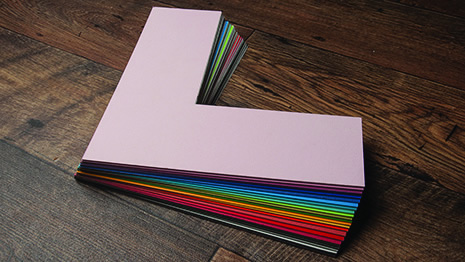
Coloured and Textured Mounts
Our standard mountboard is 2mm archival board which comes in white, soft white, light cream and ivory. Coloured boards also available.
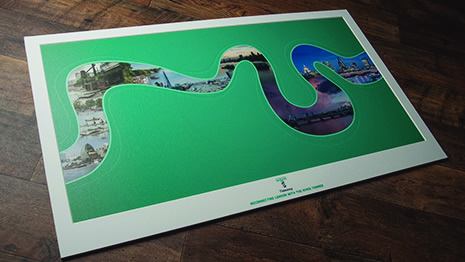
Mount Printing
Not only can we cut mounts to size. We can also print your company logos or personal messages directly on to the mount itself. Please ask for more information.

DRY MOUNTING
Here at SohoFrames we offer a comprehensive and professional Drymounting service. This is popular option to keep your prints flat for both framing and presentation purposes in a clean minimal fashion.
Drymounting is undertaken at the owners risk unless we print the print. It is not a reversible process. Please see our terms and conditions for more information.

Foamcore
This is a lightweight and affordable option. Great for large posters or other artworks to be framed.
Available in 3mm & 5mm Thickness.
Cost: £16 per finished metre

Kapa
This is heavyduty foamcore, reinforced with two sheets of aluminium providing a protective layer for your photograhic prints. Very rigid with a smooth surface.
Available in 5mm.
Cost: £45 per finished metre

Forex
This is a solid sheet of PVC. Great for both display and exhibition purposes due to its durable nature.
Available in 3mm Thickness, both black and white.

Dibond
This is a composite of PVC sandwiched between two aluminium sheets providing a superior rigidity, smoothnes and weight verses other substrates.
Available in 3mm Thickness.
DRY MOUNTING FAQs
Q. What is a drymount?
A. In general terms this is where an artwork, poster, print etc is bonded onto a substrate.
Q. What are prints and artworks usually drymounted onto?
A. A dry mounting substrate could be poly or foamboard, Kapa board, Dibond, or aluminium sheets, being the most and least requested.
Q. What is the process?
A. There are two main processes that most picture framers use: mechanical rollers and vacuum heat presses. With a mechanical roller system, the print is fed into the machine, and the heavy rollers slowly iron the print onto a board (foamboard, Kapa, etc) which has an adhesive coat applied to it. The pressure bonds the print to the board making it both rigid and flat and suitable for framing. This is a cold process.
Q. How is a print or artwork bonded to a substrate with the heat press method?
A. The pressure to glue the print to the substrate comes from the vacuum created inside the machine by an evacuation pump. This kind of press can also be heated, which activates the adhesive tissue sandwiched between the print and substrate.
Q. What process do you use at SohoFrames?
A. We use the roller method.
Q. What are the advantages of this?
A. It allows us to mount prints up to 1000mmm x 1500mm.
Q. Can you mount larger prints?
A. We can arrange that as well. Please contact us for details.
Q. Why dry mount a poster / print for example?
A. In short, to prevent the possibility of the print wrinkling or warping inside the frame. This is something that often occurs particularly in air-conditioned offices.
Q. Why would a print warp?
A. Size, environmental conditions, print type, and poor framing can cause a print to warp. We recommend the dry mount process for the prints we make if they are then to be framed and are over a certain size, typically A3 to ensure that they remain perfectly flat inside the frame.
Q. How can “poor framing technique” damage a print or artwork?
A. Most usually by placing the glass directly on top of the print or artwork. There should be an air gap as this minimises the chance of wrinkling and warping, which is more of a problem for some paper stocks than others. For example, modern film posters almost always wrinkle if they are framed with the glass placed straight on top of them.
Q. Is a drymount the only way to avoid the chance of an artwork wrinkling?
A. It is one way to minimise these risks. But here are caveats.
Q. What are the risks of drymounting an artwork?
A. As the process involves feeding the artwork into a set of rollers or squeezing it onto the supporting substrate inside a vacuum press, there is a chance of damage. This could be specks of dust or debris trapped between the artwork and the substrate. These show up as pimples and often cannot be rectified. Other possible forms of damage can be wrinkles and bubbles. These can occur due to poor technique or if the artwork is already damaged in some way.
Q. How likely are these kinds of issues to occur when drymounting something?
A. It is very rare to have any issues at all, but the possibility still exists, which is why we only guarantee the process if we print the print ourselves. If it is the
client’s own print, then the risk remains with the client. A waiver form is usually required before going ahead with this process with the client’s own artwork. This is a standard procedure across the art industry. That said, as mentioned, mishaps are extremely rare.
Q. Well I do have a valuable print and for a successful framing result it does need to be stabilised with some kind of bonded mounting process. What can I do?
A. There are archival methods of stabilising prints and artworks that are either already wrinkled, creased, dinked etc, or that might wrinkle or warp once framed due to external forces and stresses. This work can be carried out by a trained and experienced conservation expert.
Q. Can you arrange this?
A. We can and have stabilised and fixed many prints and artworks like this over the years.
Q. How expensive is it?
A. Standard dry mounting on foam or Kapa board is not particularly expensive in the grand scheme of things, typically about that of a high-quality window mount for the given size. Dibond (a plastic-aluminium composite) costs a bit more, and aluminium sheet is expensive and only ever used on fine photography where the highest spec is demanded by the artist. But as mentioned, this is still all carried out at the client’s risk regardless of the method (standard, archival or conservator) unless we produce the artwork. When signed prints need to be dry mounted due to their size or finish (some finishes, like glossy surfaces are more prone to warping and reflection issues than say heavy matt finishes) it is best to print, mount, and if perfect, then sign.
Q. Can I remove a dry mount that you make with poly / foam / Kapa board?
A. Yes and no! No, as in it is considered permanent. We have however in the past received an artwork that was already mounted onto foamboard, and the client wanted it removed due to a wrinkle that happened during the process that was done elsewhere. We sent this artwork to a conservator colleague of ours and the print was successfully removed and then stabilised with a Japanese rice paper backing. It was however a long and time-consuming process, and the outcome cannot always be guaranteed.
Q. Can you print something for me and dry mount it so I can hang it on the wall just like that?
A. We can. We recommend using Kapa board for this because it is a stiffer substrate and therefore less prone to warping.
Q. I see. So, it may warp and not last that long?
A. It may well warp, yes, and as the print is unprotected by glazing, it might not last that long due to dust and damage. We would only recommend this choice for temporary exhibitions where costs need to be kept as low as possible.
Q. What sort of artworks are most likely to need drymounting?
A. Photographs, prints, posters and film posters are the most common artworks that we drymount onto various substrates.
Q. I have an expensive but modern film poster that has a few wrinkles. Do you recommend drymounting to fix this?
A. We recommend backing a modern wrinkled film poster onto Japanese rice paper. It is a process that works extremely well. It is also archival and can be reversed if needed.
Q. How best to stabilise a vintage film poster?
A. Linen backing is the go-to to stabilise and preserve vintage film posters.
Q. How long does linen backing take?
A. Linen backing takes several weeks to do properly. This is because the poster is soaked, applied to the linen and then dried extremely slowly to achieve a perfect result.
Q. I have a watercolour artwork that is quite rippled and needs flattening. Can you drymount this?
A. This is not recommend at all. We would advise seeking the help of a qualified and experienced paper conservator for this.
Q. I have a painting on canvas that is warped / rippled in several areas. Would drymounting fix this?
A. Again, we would advise seeking the help of a conservator experienced in the repair of damage caused to works on canvas. Ripples are normally rectified by hanging the painting under weight and / or humidifying it in a special chamber. Ripples caused due to poor stretching can sometimes be rectified by careful restretching of the painting. We would need to see it to better advise you.
Q. I have a silver gelatin photograph that is very warped. What can be done to fix this?
A. If you have a photographic silver print that is warped then we would recommend returning to the printer who made it, or another specialist photographic printer who still uses the chemical process. They have the skills and equipment to possibly help with resetting the photograph. Warped prints are often caused by an incorrect drying technique at the time of printing.
Q. Do you have access to trained and experienced conservators to help with any artwork issues?
A. We do. Please just ask.
Q. How do I proceed with your normal drymount service?
A. Contact us and we will go through everything with you. If it is your own artwork, then we would ask you to sign a dry mount approval and acceptance of risk form before we drymount the work. This is not needed if we print the print concerned.