
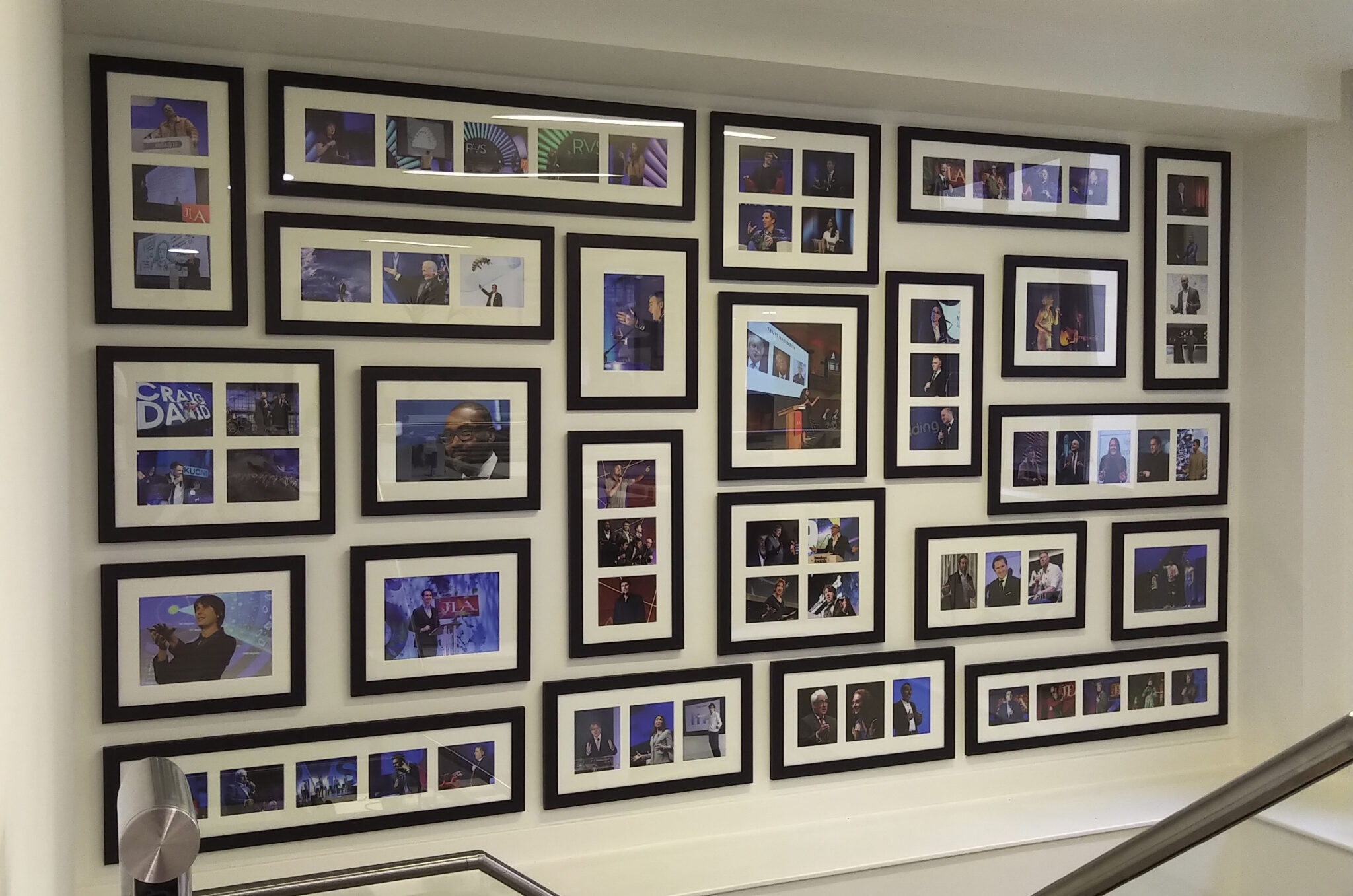
So, you have collected or received your finished and now beautifully framed piece of art and now wish to display it on the wall of your home. Of office, restaurant, etc, and you would like to know what to avoid when hanging pictures. It’s great to ask this because there are a few things worth thinking about before hanging any picture frame to avoid possible issues arriving in the future that could damage both the actual frame and the art within.
-
We think that the first thing to avoid when hanging pictures would be to use the wrong wall fixings.
There are different kinds of wall fixings for different kinds of walls. For example, concrete or brick walls may require a rawlplug and screw. This means tools are needed, a drill of the right size to fit screw and plug and of course the screw must be of a size suitable to support the weight of the picture frame. Partition wall or walls that have been battened out with joists and plasterboard will need special plasterboard or hollow-wall fixings. These can be worm-screw type or butterfly type, which open out to clamp the hidden part of the wall after inserting into the drilled hole. Worm-type screws can be screwed directly into the plasterboard, although a drill would be needed to start the hole for larger screws. A screw is then screwed into the worm-screw. There are also hard-wall hooks, which have four pins spaced around the disc that the hook is part of. These can be hammered directly into a hard wall.
-
Hanging a frame above a radiator or other heat source.
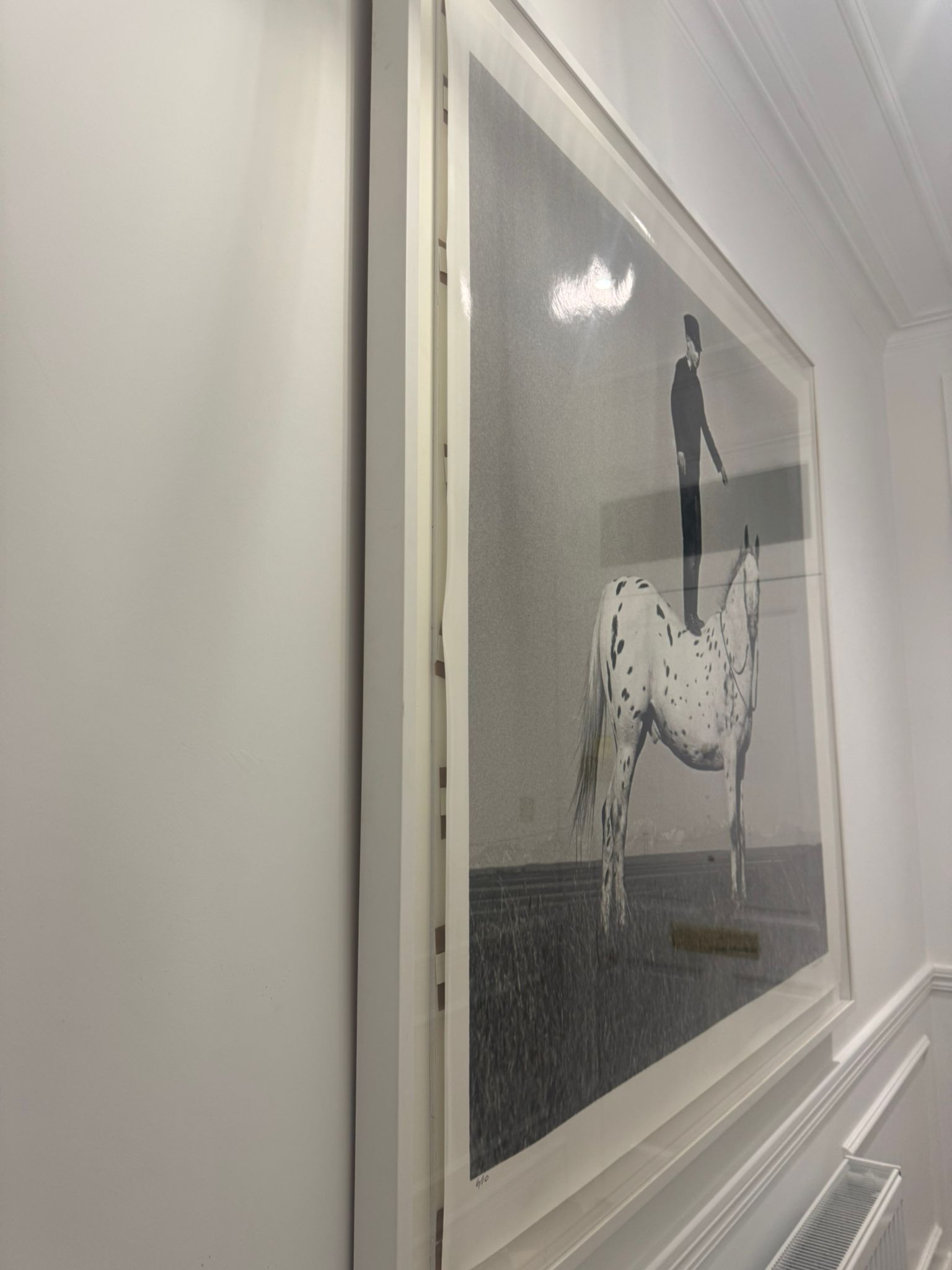
The heat from a radiator or fire can affect the art inside the frame. Usually this means that glues used in the products used to mount the artwork soften and lose their adhesive properties. This results in the artwork peeling away from the mount or float board, as seen in the picture attached to this blog.
-
Hanging a frame inside the property but against a cold outside wall.
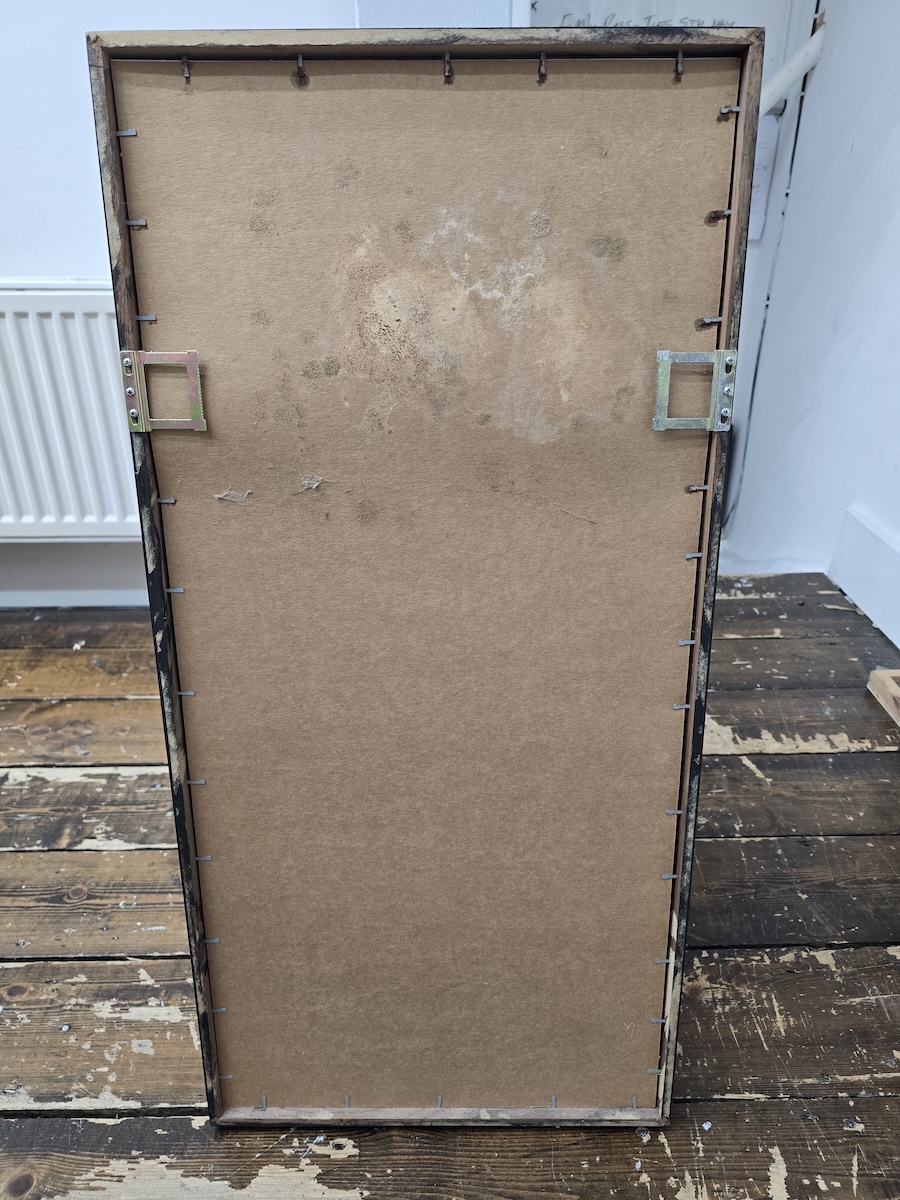
This too can cause issues with the artwork (and frame). Outside walls are often colder than the rest of the property, which creates a temperature difference inside the frame between the front and back. This can result in condensation issues. Damp also sometimes penetrates through the walls and into the frame. We have seen a lot of mouldy backing boards! We can mitigate this by using different kinds of backing boards like moisture-resistant MDF (https://mdfdirect.co.uk/moisture-resistant-mdf-vs-standard-mdf-which-one-should-you-use/) which we can then seal. These materials come in thicknesses greater than the standard 2mm backing boards we use. We can install 18mm thick backing boards if the frame is deep enough. Another material we could employ is Marine Plywood (see here for more information about this product https://www.thespruce.com/what-is-marine-grade-plywood-2736672).
-
Exterior walls. This means hanging a frame outside.
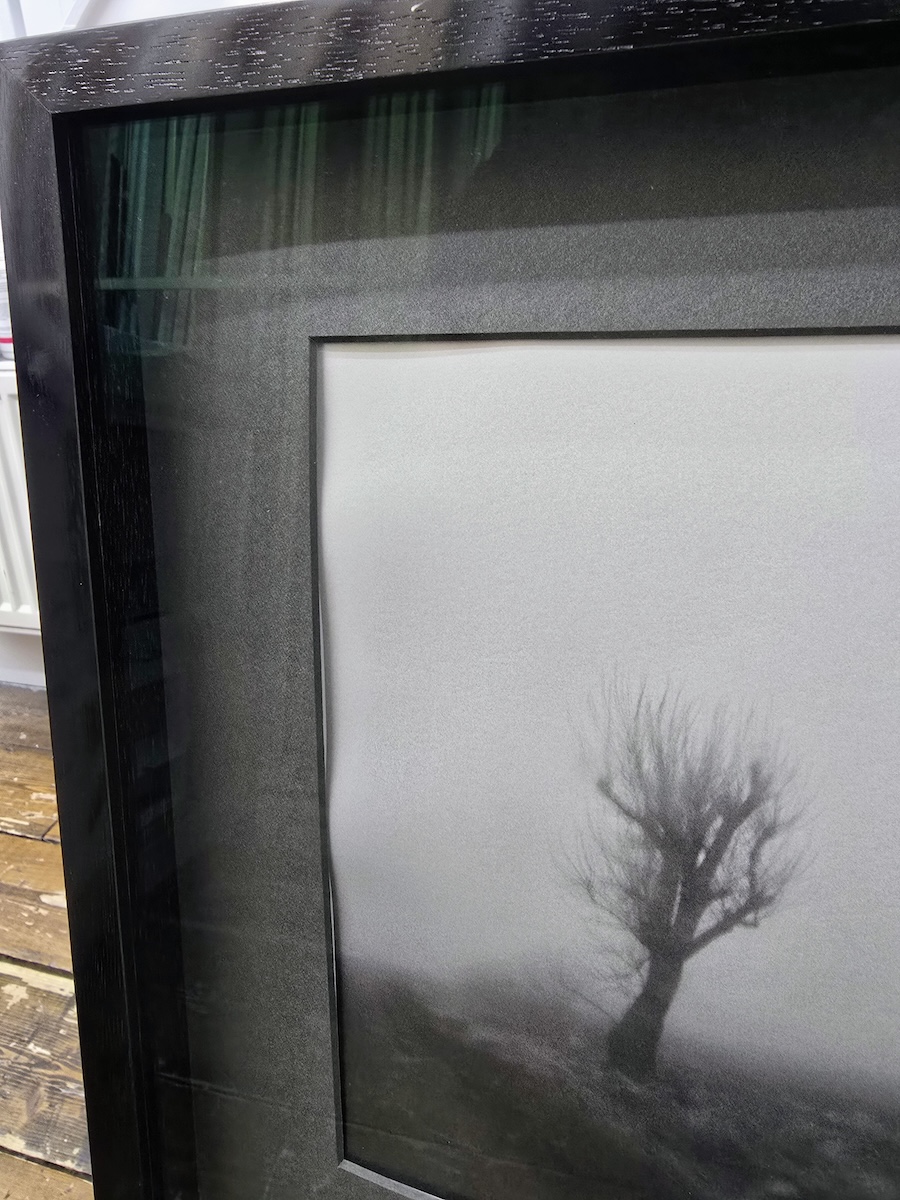
It will not last if exposed to the elements. Wind, rain, snow ice and sun all take their toll on the wood, and the atmospheric conditions will destroy the artwork too.
-
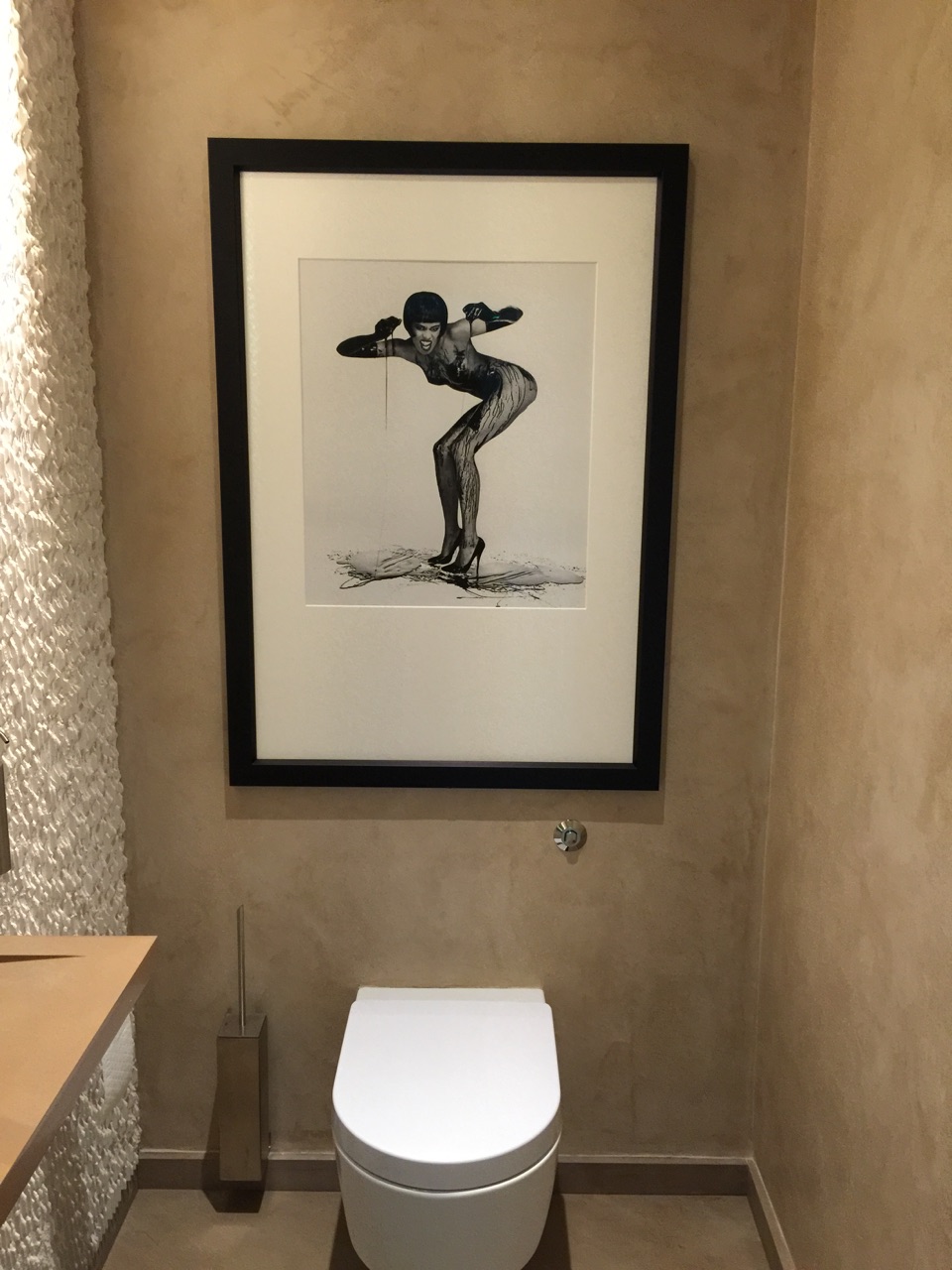
Hanging a frame in humid environments like bathrooms and kitchens
This can also sometimes affect the frame and art inside. Steamy bathrooms are not good, and hanging in kitchens above the cooker can be problematic too. The heat and fumes from water and oil will spoil the frame and affect the artwork. Hanging in a “clean” part of the kitchen is usually fine. Well-ventilated bathrooms can also be okay. That said, we would never advise hanging anything valuable and/or irreplaceable in these kinds of places.
-
This leads us on from kitchen and bathrooms and onto bedrooms.
Perhaps not what to avoid when hanging pictures but rather be careful where you hand your pictures! Hanging large frames directly above the bed would not give us an easy peaceful sleep! If you do decide to do this, then make sure that the frame is secured properly to the wall. The last thing you need is the frame to detach and land on your head in the middle of the night!
-
Picture Hanging Solutions
After reading this you might be wondering if there is anywhere you anywhere you can hang a picture frame without there being issues!
People can and do hang their framed artwork in all of the above places and there are some things we can do, as a professional picture framing workshops, to address / mitigate any potential problems before they arise.
If a picture frame is going to be hung on a cold outside wall, then we can add extra insulation to the back of the frame. We usually do this by adding a panel of moisture resistant MDF. Depending on the internal space of the frame this could be anything from 6mm all the way up to 18mm. Yes, it will make the frame heavier, but it will insulate the frame from any cold seeping through the wall. The moisture resistant properties of the material will help prevent the chance of any mould damage. We can also further seal the MDF panel with various products to give extra protection.
If a picture frame must be placed above a heat source, like a radiator, then a thick radiator shelf can lessen the chances of the heat degrading the gums used in the hinging materials. Again, MDF is often a good choice for this.
For kitchens, thicker glass can also help. 2mm is standard, but it could be 3mm, which is also tougher and then when maximum protection is required, 4.1mm laminated glass could be an option.
Bathrooms can be trickier due to the very humid conditions. The key is to make sure that there is good ventilation that extracts steam and moisture when taking a shower etc.
When hanging picture frames, particularly large and heavy ones in places where an installation failure could cause injury, i.e., like over a bed, then the solution is to employ the services of a professional art installer. SohoFrames works with one trusted and insured partner for all installation work. They would make sure that not only are the hangings on the back of the frame correct for the size and weight of the frame, but that also the wall fittings are secure and safe for the load.
Rectifying damage.
If an artwork has been damaged due to environmental reasons, then most issues can be fixed. This though will almost certainly require the services of a professional art or paper conservator. And it may be expensive. It is therefore better to take preventative measures before installation.
(Please note that this is a guide only. If an artwork is very valuable and or irreplaceable, then it should only be displayed in an ideal environment. Please feel free to contact us for advice).
If you need help framing your piece of art, contact us today!