What is the difference between a floater frame and a traditional frame?
This is an often asked question by clients visiting our workshop, and for this reason we have framed examples of each style on the wall. It helps with the explanation.
So, what is the difference between a floater frame and a traditional frame?
TRADITIONAL FRAME
The most important difference between the two picture frame styles is that a traditional frame has a rebat. This is the term given to the “lip” that keeps the inside parts of the frame, i.e., backing board, mountboards, artwork, spacers, and glazing, in place.

The traditional rebated picture frame gives the versatility of having glazing, whether it be glass or acrylic of the various types that fine picture frame workshops offer, or not. It depends on the type of artwork and client choice.
Many oil paintings of the type you can see in any National Gallery are almost exclusively framed with traditional frames, and some have glass, and some don’t.
REBAT ADVANTAGES
There are other advantages for a frame that has a rebat. If an artwork needs to be framed “straight to edge”, i.e., without any float or window mounting, but the edges of that artwork are damaged, then the rebat can help cover this damage.
A painted artwork, usually on canvas, often has cracked or missing paint around the edges. This is usually caused by the stress from the stretching process, wear and tear, age, etc. With a traditional frame these problems can be addressed by milling the inside of the traditional frame moulding to increase the width of the rebat. This wider “lip” can cover this damage without the need for expensive retouching and repair work. It’s a handy and inexpensive solution to a common framing problem.
FLOATER FRAME
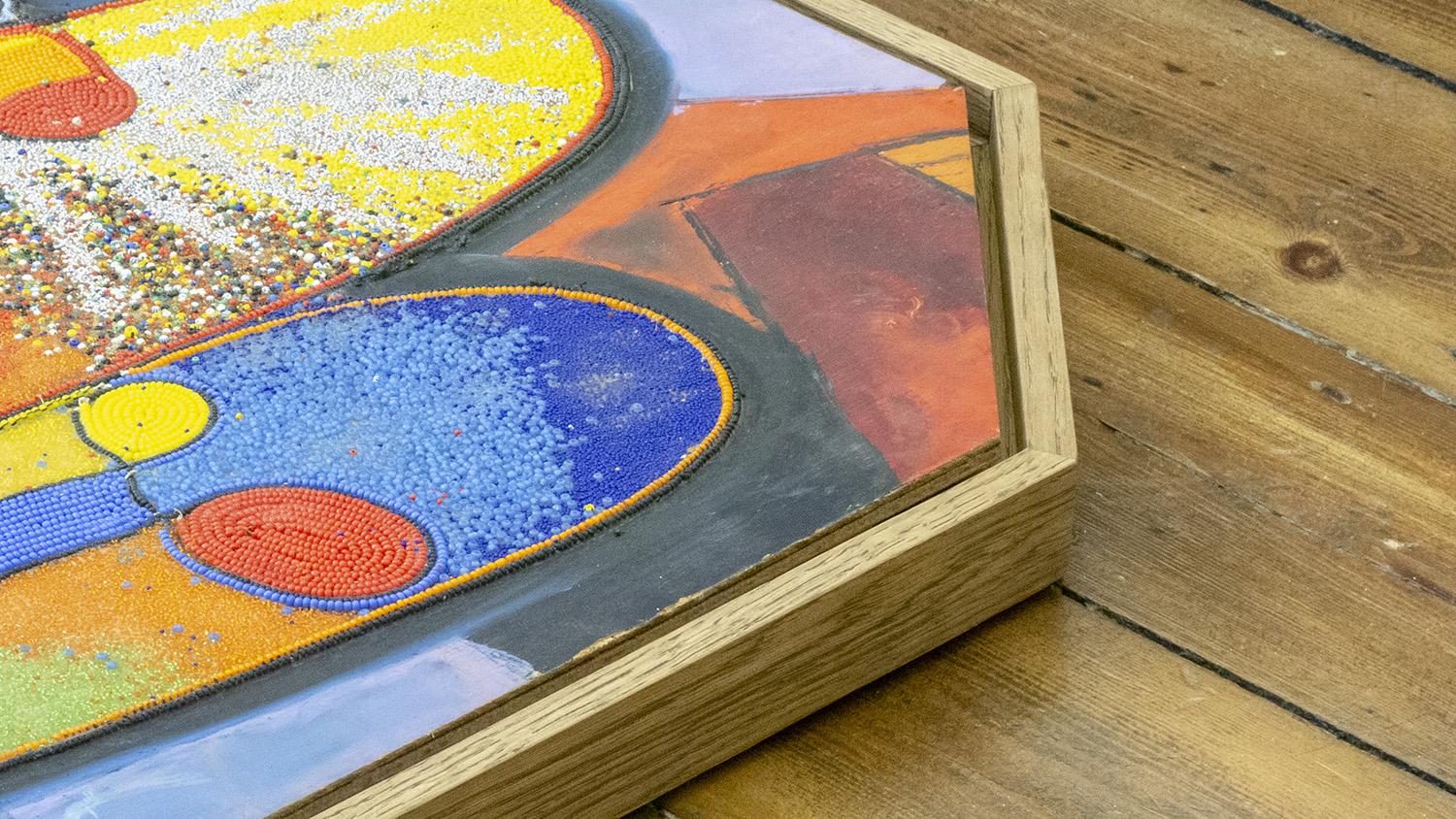
By now you will have guessed that what is the difference between a floater frame and a traditional frame? is that a floater frame does not have a rebat. It is basically an L-shaped profile that when joined together (usually in a square or rectangular form for most artworks, though SohoFrames specialise in making floater frames in almost any shape, round, oval, triangular, etc) allows the artwork to sit inside it. There is almost always a small gap around the artwork, as can be seen in this photograph.
It is not possible to have glazing with this type of frame. Well, that is strictly speaking. Of course, a channel could always be milled into the front face of the frame and a panel of acrylic glazing screwed over it, but it kind of defeats the purpose.
The canvas floater or tray frame is used mostly for works of art on stretched canvases. As mentioned, the artwork, the stretched canvas, sits inside the “tray” or floater frame and held in place by screws.
Here at SohoFrames we offer two types of floater frame. The first are standard profiles, and the second are custom or bespoke profiles. These offer virtually unlimited versatility in terms of profile size, profile shape, material, colour, finish. Framing is an investment, above all in pleasure so we like to offer a picture framing service where there are really no limits to the artistic imagination.
The most popular profile shapes are clean straight edges. The “walls” of the floater frame can be anything from 4mm upwards. Thin wall frames (which you can also see on our website) look extremely elegant. However, some clients prefer wider profiles and sometimes with carvings and other embellishments added.

FLOATER FRAME VERSATILITY
We mentioned that the most common types of artwork framed in floater frames is the stretched canvas and that is true. This can be a painting or a print.
That said, the floater frame also works well with photography. A photograph should be ideally mounted onto aluminium or dibond, and when that is done, it can be framed in a floater frame. Of course, without glass, the artwork is exposed to the elements.
Here at SohoFrames we are often asked to frame ceramics with this framing method. Ceramics, usually decorative tiles, which being glazed in a kiln are already protected from dirt and grime. They can be displayed on a wall, or even flat and when the tiles abut straight to the inside edge of the frame can also be used as unique kind of serving tray. And yes, we are asked to do this from time to time. It works well.
FLOATER FRAME VARIATIONS
A variation is a mix or a combination of a traditional frame and tray or floater frame. There are two possibilities.
- The inner frame can be a traditional frame with a rebat, with a “moat” and a floater frame rim.
- The inner frame can be in the floater style with a gap around the artwork, followed by a “moat” and then an outer floater rim. This is sometimes called a Double Tray Frame.
And both these variations can be fully customised to suit exact client specifications. We are extremely skilled in the design and making of all these types of picture frame as well as their variations.

We think this answers the question of what is the difference between a floater frame and a traditional frame? but any questions please just ask.